
This sermon was preached to the people of First Congregational Church of Battle Creek on Sunday, June 21st, 2026. The text is Genesis 21.8-21.
My friends, I speak in the name of the Crucified and Risen One. Amen.
My last living grandparent, my dad’s mom, passed away in the autumn of 2018. Her funeral was the Saturday before Thanksgiving. And back at my parents’ house on one of those darkening November evenings, I spent some time going through several boxes of items that my dad collected from her home in southern Virginia and brought home to hold on to.
There were the usual suspects—photo albums and framed portraits, some legal documents, a bible or two, some other unobtrusive tchotchkes—the kinds of things that get placed in a box and left forgotten in an attic until a looming estate sale rescues them from the dust and eaves under which they have languished.
Among those boxes was a red cloth-bound book with typeset pages, the project of one of my historian relatives a few decades ago. The book chronicles the story of the Aaron family, who were my late grandmother’s maternal ancestors.
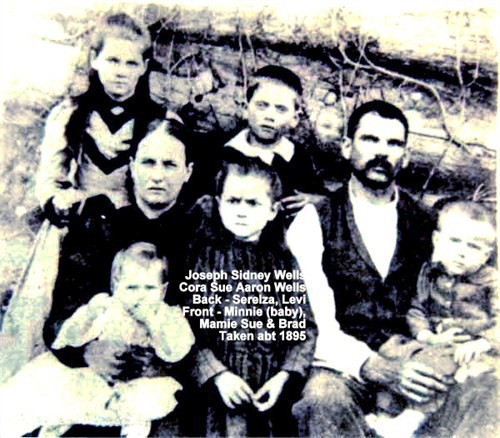
Admittedly the book didn’t make for the most riveting reading, but it opened an important window for me into our family’s history all the same, chronicling how this slice of my ancestry came to their corner of Pittsylvania County. I had just begun to get interested in ancestor work around this time, and I was grateful for the insight into my people’s lives and livelihood.
As I was leafing through the book, I discovered that my relative included a transcription of an inventory of the Aaron family’s household that a tax assessor had made around the time of the 1850 national census. It starts off relatively benign and matter of fact:
Table and chairs: 1. Beds: 5. Wash basins: 2. Chickens: 12. Cows, 4. Donkeys, 2. Dogs, 2. Carriage, 1. Slaves, 2 (one male, one female). Plow, 1. Horse, 1. Mare, 1. Chest of drawers, 1.
Wait a second, go back. What was that?
Yes, numbered among livestock and furniture and farming implements are two human beings, whose names are lost to history, whose labor was stolen, whose stories went untold, whose contribution to my ancestors’ household was noted by the tax man as matter of factly as the donkey and horse it was doubtless their job to groom.
There was the incontrovertible proof that I had long suspected, being descended from farmers in southern Virginia, but no one in my family wanted to talk about (and for good reason): we come from enslavers—as if my grandmother’s maiden name being “Booth” wasn’t enough of a clue that our roots run well south of the Mason-Dixon.
Do you remember two weeks ago when we were discussing Sarai and Abram’s move out west to the other end of the Fertile Crescent?
Remember that they packed up their entire lives and left everything familiar to venture out to a land they had no knowledge of, in response to the invitation of a wild desert deity whom neither of them knew?
And do you remember what I said about their family that’s true of every human family? I said, “every family comes with baggage.” Welcome to my family’s baggage. And today, we have heard of some of the family baggage that our ancestors in faith carried with them to their new corner of creation.
Much like the story of my own ancestors’ entanglement in enslavement, there are stories in our faith we would simply rather turn away from.
But the remarkable thing about Scripture is that it refuses to let us look away. Again and again, it preserves stories that later generations would rather sanitize or forget. The Bible is not interested in protecting the reputations of our ancestors. It is interested in telling the truth.
And as much as I wish this were not the case, unfortunately I do not have a neat, cutesy, sentimental story to tie a bow onto the Hagar narrative.

Because there is nothing neat about a woman and her child being sent out into the wilderness with nothing but the clothes on their back and a day’s worth of water, which is how so many immigrants arrive at our nation’s southern border, having been forced away from everything they knew.
There is nothing cutesy about a trafficked and enslaved woman being reduced to an instrument for the designs of her enslavers, as were those two souls whose entire stories were reduced to a scribbled number two on a tax man’s spreadsheet in the 1850s.
There is nothing sentimental about the way the most powerful person in this family system sacrifices the one with the least for the sake of assuaging the emotions of another vulnerable person who has just a little more power—just as so many vulnerable people in our society, our community, our families, and even our churches still are today.
True, this might be one of those kinds of family legacies we want nothing more than to consign to a box in the attic and forget about until someone unfortunately (and inevitably) rediscovers it in an estate sale.
But at the same time, there is profound goodness to be found in wrestling with this story if we are bold enough to look at it and reckon with it—in the same way there is much goodness to be found in the way that we wrestle and reckon with our own families’ respective baggage.
In fact, when we actually look at the Hagar narrative, we see something absolutely critical to our understanding of the entire trajectory of the Hebrew scriptures—which, I remind us all, are the very stories that shaped the prophetic and ethical imagination of Jesus himself.
When we first meet Hagar, in Genesis chapter 16, she has run away from her enslaver Sarai for fear of her wrath. Yet the storyteller tells us that God finds her, and promises that her unborn son will be the father of a great nation. And then the storyteller tells us: “So Hagar named the Lord who spoke to her, ‘you are El-Roi,’ for she said, “Have I really seen God and remained alive after seeing him?”
Yes; a terrified, abused, trafficked, enslaved woman who is reduced to a reproductive instrument and cast to the fringes of the wilderness is the first theologian, the first human to name God in Scripture.
Yes; God’s covenant people know one of God’s own names because they preserved the testimony of a woman their ancestors enslaved.
When we meet them again in the wilderness several chapters later, we hear how God hears the cry of a thirsty child and springs into action to open his mother’s eyes so that she may see through the clouds of fear and grief and see the life-giving well that she cannot. After all, that is what the name Ishmael means: “God hears.”
And so it is to the cries of thirsty children that we must listen and to which we must move if we are going to embody the fullness of our role as bearers of that same divine image.
Are these stories comfortable to look at? Absolutely not. (And if you think these are bad, just wait until you hear what Abraham does to Isaac next week). And neither are many of the stories that our own families carry. A lifetime of genteel White religiosity trains us to avert our eyes, to paper over the trouble, to move on to more “positive and encouraging” narratives.
But we must not look away.
Vital faith invites us to listen to that part of us that recognizes that there is something gravely amiss here. That part of us—that voice that says, “hey, wait, what the hell!?”—is the Spirit of God speaking to us. That discomforting tension is our moral imagination being stretched wide enough to make room for someone else’s untold story.
And that friction kindles the fire of prophetic witness. If we refuse to snuff it out, eventually it erupts in words and acts that break cycles of silence, violence, oppression, and abuse.
Beloveds, we must never be content to reduce the stories of human beings to footnotes on a spreadsheet, even if our minds do that just to survive the terror we inflict upon one another.
When we don’t unpack those stories, we need to wonder, whose stories remain untold? Whose contributions get papered over? Whose humanity gets reduced to an accounting entry?
The compilers of Genesis could have left Hagar’s story out. But they didn’t. They remembered. Because where empire keeps inventories, God’s people tell stories.
Perhaps that’s because telling the truth is one of the ways God repairs the world.
On this Juneteenth weekend I regret that I will never be able to hear the full stories of the two souls whose stolen lives and stolen labor sustained my ancestors’ household. But I can honor what remains untold of their stories by telling the truth about my ancestors’ role in them.
And that is perhaps how we honor Hagar too.
Because God’s people are the people who remember those whom empire tries to erase.
We honor their stories by listening to those whom empire refuses to hear.
We honor their stories by refusing to let forgotten lives remain forgotten.
We honor their stories by striving to build a world where no child’s cry goes unheard. Amen.
Query: What stories have been boxed up in my own family, my church, and my community—and what does faith require of me now?


Leave a comment